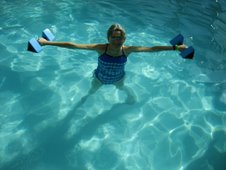
WELCOME TO AQUA FLEX'N STRETCH!!!

Experience 'All in One' combo classes of strength, cardio, and flexibility training with Aqua Flex'n Stretch as well as specialized classes for Arthritis, Fibromyalgia, Parkinson's, and other muscle conditions. Our certified instructors are top in the Los Angeles area and focus on overall health and wellness in small classes for maximum personal attention in salt and chlorine pools! The secret to success is having fun, making social connections, feeling good, and being energized. Take the plunge!


DON'T WAIT ---- CALL 818-383-4400 OR EMAIL AT AQUAFLEXN@SBCGLOBAL.NET FOR MORE INFO


2013 CLASS SCHEDULE

**PROVIDENCE/TARZANA OUTPATIENT THERAPY CENTER SALT-WATER POOL (5359 Balboa Blvd., next to 101 Freeway, Encino)
RSVP TO RESERVE YOUR SPOT!!!!
818-383-4400
All classes limited to 6 participants per class! Lots of 1:1 instruction!! FIRST COME, FIRST SERVE!
Open to the community.

Private and semi-private sessions.

Chair lift is available. Towels, all equipment, locker room and shower provided.
AQUATONE (1-hour):
(Work your whole body-cardio; strength and flexibility/balance; Adjusted for Arthritis Foundation as needed)
MONDAY: 4:30pm

MONDAY/WEDNESDAY: 5:30pm

TUESDAY/THURSDAY: 11:30am

THURSDAY: 7pm
SATURDAY: 11:15am

Fees: $150/8 classes; 1-month expiration
$20/drop-in with reservation
NEW YOQUATIX on Sundays!!!

45 minutes of restorative land yoga PLUS
45 minutes of restorative aqua

9:30 am and 10:30 classes

Half-price 1st class--only $20!!

Fees: $40/90 minutes; $150/4 classes

**BRAEMAR COUNTRY CLUB (Tarzana):
Beautiful outdoor heated pool in
Santa Monica hills.
HIIT The Water! Hi-Intensity!

SATURDAY: 9:30am - 10:30am

Aqua Tone

TUESDAY/THURSDAY: 11am - 12pm

Members:
Group: 1 class: $20; 8 class package: $150
Private: 1 class: $90; 4 class package: $350
Semi-Private: 1 class: $45; 4 class package: $170

Non-Members:
Group: 1 class: $22; 8 class package: $155
Private: 1 class: $95; 4 class package: $375
Semi-Private: 1 class: $50; 4 class package: $195
$29 one-time non-member fee

Free parking, towels, lockers, equipment

CALL 818-383-4400 OR EMAIL aquaflexn@sbcglobal.net

**FOUR SEASONS CENTER FOR HEALTH AND LONGEVITY (Westlake Village)
Private and semi-private sessions are available at this first-class heated indoor pool for members and hotel guests.
**AT-HOME PRIVATE/GROUP SESSIONS:
Want the convenience of a private class at your home? Or, put together your own group, and we'll come to you!
CALL 818-383-4400 or EMAIL at aquaflexn@sbcglobal.net
http://www.linkedin.com/

Showing posts with label muscle. Show all posts

Sunday, July 15, 2012

LESS CALORIES = LESS BODY FAT


It might be time to shift the goal for obesity treatment away from just weight loss and body mass index to include fat reduction and a better understanding of nutrition science, say the authors of a Journal of the American Medical Association study (2012; 307 [1], 47–55).

At the crux of their findings? Body fat increased when healthy subjects took in more calories than they burned, and the calories themselves appeared to be more important than the amount of protein ingested. When subjects consumed more calories than they expended each day, they appeared to gain body fat and lose lean muscle if their food choices were low in protein.  (Ruth Sova, ATRI e-list, 7/15/12)

Monday, April 30, 2012

FIBROMYALGIA PAIN RELIEF


Try Gentle Water-Based Workouts

Whether or not you're a water lover, you'll want to at least try water exercises. Numerous studies report that this form of low-impact exercise -- especially when done in warmwater -- can help reduce pain, stiffness, fatigue, and depression in many people with fibromyalgia. And you don't have to endure the back-and-forth monotony of swimming laps if that's not for you. There are a variety of fun, get-wet workouts to choose from -- including music-based aqua aerobics, underwater walking or jogging, strength training, stretching, and water-based relaxation therapies like yoga, tai chi, and Watsu. Heck, some spas and fitness centers even offer pool-based Zumba, hip hop, and country-western line dancing. (Real Age, 4/30/12)

Tuesday, July 27, 2010

Muscles and Alzheimer's

More muscle strength is associated with a reduced risk of Alzheimer’s disease and cognitive decline, according to a study published in the Archives of Neurology (2009; 66 [11], 1139–44).   Investigators found that increased muscle strength was associated with a slower rate of decline in global cognitive function. (Ruth Sova, 7/20/10)

Friday, February 26, 2010

LEG AND FOOT CRAMPS

Do you find your muscles in legs and/or feet cramping up? Cramping happens often, especially when first starting exercise. Basically, cramping is a fatigue of the muscle, either physically or physiologically - when you are asking your muscles to do something they are not used to, even when you stand too long, walk too far, walk/wear the same shoes for too long, do some exercise it is not used to....thus the toes cramp when you start exercising. 
To help the cramps, stay hydrated, ease into your workouts, and keep the body supplied with the minerals and elements it needs, such as natural supplements like bananas and other foods. Eventually the feet and legs get stronger and the cramps will be reduced. Don't forget to skip the coffee or tea before a workout. They can dehydrate the body. Also, try a cup of tonic water with quinine. Or, try mustard. Amazingly, they work!

Sunday, May 31, 2009

Key Muscle Group for Great Knees + Workouts


If your knees bother you when you bend ’em, here’s a natural way to help ease the pain: Get strong quads. 

Research shows that strengthening these key leg muscles can actually help you maintain your cartilage -- the stuff that tends to break down as arthritis sets in. The result? Less knee pain. 

Strengthen and Save
In a study of people suffering from knee osteoarthritis, having strong quadriceps protected against cartilage loss at a certain area of the knee called the lateral compartment of the patellofemoral joint. Quad strength didn’t seem to help cartilage in other important areas of the knee. Still, people with the strongest quads reported less knee pain and better physical function than people with the least strength in this muscle. Know what else is great for knees? Walking backward.  (Real Age 6/1)

Walking in the water may seem easy, but is incredibly beneficial to your knees. You get resistance without pain. Try it, you'll see a difference. Start out with just a few minutes, then increase by 2 minute increments to push yourself. Try to walk for at least 30 minutes, forward and backward. 

Want to strengthen your quads in the water? Do sets of 10 squats bending your knees as much as possible each time. Start with one set, then increase to 2, then 3. Walk in between sets. It's less boring. Here's to the knees!


Thursday, February 26, 2009

10 Longevity Tips

According to Dr. Smith of the Jewish Home for the Aging in a recent article, living to 90 and beyond is pretty straightforward. He says, "the overall lesson is a simple one: Get out of bed in the morning and get active."

Apparently the Jewish Home has the highest number of residents living beyond 90. Based on their collective wisdom, here are Dr. Smith's top ten tips to increase your chances of reaching the century mark:

"1. Decide what is most important to you and focus on it. A lot of life's little annoyances don't seem so great if you keep your priorities straight.
2. Participate in some kind of physical exercise, depending on what your body will allow you to do.
3. Keep your mind sharp through mental exercise. The mind is a muscle. It must be used.
4. Have a balanced diet and pay attention to what you eat. In short, eat right.
5. Avoid isolation. Find someone to love and something to keep you engaged.
6. Relax. Don't let stress eat you up. The older people get, the more they seem to understand that it doesn't pay to sweat the small stuff.
7. Don't smoke at all and don't drink too much.
8. Remain spiritual. Believe in something.
9. Laugh every day. Happiness breeds contentment and laughter remains one of the best medicines.
10. Keep 'spice' in your life. Either in your food, your reading or your love life."

Makes a lot of sense! 

Tuesday, November 11, 2008

AVOIDING MIDDLE-AGE WEIGHT GAIN

As we age and our metabolisms slow, weight gain is inevitable if we don't do something to control it. Even if you're working out, you may need a new or more intense routine to keep the weight off (especially around the waist). So what can you do??

1. Increase strength training to 2-3 days per week for at least 30 - 45 minutes each session. Use weights, resistance bands, or noodles (in water) to strengthen muscles and bones and reduce fat around the waist.

2. Increase the pace and work harder each session. By increasing the intensity, the heart and cardiovascular fitness is improved.

3. Keep one day at a relaxed pace to avoid burnout. Choose a relaxing exercise for a comfortable pace to let yourself relax and even 'zone out'.

Don't forget that nutrition plays a key role in controlling weight gain. So, don't skip breakfast and maintain a healthy diet to see results. It may not be easy, but it's worth it!

Tuesday, April 15, 2008

10 Reasons to Lift Weights

Most of us know that strength training is important, but that doesn't make it any easier to do it. It may help to know why strength training is so important and all the ways it can help you look better and feel better.

1. It helps you lose fatWhen you lift weights, you build lean muscle tissue which is more metabolically active than fat. When you increase your muscle, you also increase metabolism which means you're burning more calories throughout the day. Regular strength training is just as important as cardio exercise for losing fat and getting fit.

2. It makes you strongIt may seem obvious that lifting weights can make you stronger...but what some people forget is that it doesn't just make you strong for your workouts, it makes you stronger in other areas of your life as well. When you lift weights on a regular basis, everything else becomes a little easier too - carrying groceries, housework, gardening, carrying the kids, etc. And, don't forget, it doesn't just make your muscles stronger, it makes your bones stronger too which can help reduce or even manage osteoporosis.

3. It reduces your risk of injuryThe nice thing about strength training is that it strengthens everything, not just your muscles and bones. When you lift weights, you also strengthen connective tissue - the ligaments and tendons that keep your body moving well on a regular basis. Strengthening your connective tissue will help you continue to operate in peak condition and protect your body from injuries.

4. It can reduce arthritis painRecent studies have shown that arthritis sufferers who lifted weights actually reduced their joint pain. By strengthening the muscles, they were able to cushion and protect the joints during impact activities like walking. And don't forget...most physical therapy programs incorporate strength training to help rehab a multitude of injuries, which just proves that lifting weights can make a difference in getting better and having a better quality of life.

5. It increases balance, stability and flexibilityWhen we don't preserve muscle mass with strength training, what happens when we grow older? We lose muscle mass and that's often what leads to weight gain and loss of balance and flexibility. Lifting weights can help you work your joints through a full range of motion, keeping them strong and flexible and keeping you steady on your feet.

6. It can make you better at sportsMost athletes these days follow some type of strength training program to keep them strong and avoid injuries. Training specific to your sport can also help you improve your power, strength and speed to make you a better athlete. Even kids and teens often benefit from some type of strength training when it comes to playing sports

7. It makes you feel better about yourselfAccording to some studies, both men and women feel better about themselves when they lift weights. By getting stronger and noticing changes over time like being able to lift more weight and do more exercises, both men and women build confidence and, especially for women, improve body image. Lifting weights, along with other types of exercise, also helps build confidence and can even help manage symptoms of depression and anxiety...a great way to deal with stress in a healthy way.

8. It can help lower blood pressureSome studies have shown that regular strength training can help reduce high blood pressure over time, so this may become another way (aside from cardio exercise) to help treat high blood pressure in some people. If you do have high blood pressure, I don't have to remind you that you should always talk to the doc before doing any new activities (but I am anyway). But, if you get the okay, consider starting a basic program along with other recommendations from your doc for helping reduce your blood pressure.

9. It adds challenge and interest to your routineIf you've been doing the same cardio workouts for a long time, that can get a little boring. Strength training is a great way to spice things up and add a completely different challenge to your body. The nice thing about strength training is that it offers so many ways to set up your workouts...there's always something new to try and you never run out of new exercises, different types of resistance, new routines and a variety of ways to work your body.

10. It makes your life betterOne thing that often surprises people after they start lifting weights is how it trickles into other areas of their lives such as working in the garden without back pain or walking up the stairs without aching knees. It's those little improvements that offer the greatest rewards and it doesn't take much time with weights to see and feel those kinds of improvements.

Created: June 21, 2007, Paige Waehner

Sunday, March 30, 2008

Keeping in Shape in Older Age more difficult for Women

According to Washington University Medical School studies, maintaining muscle and keeping in shape is more difficult for older, post-menopausal women. The new results underline the importance for older women of eating plenty of protein such as eggs, fish, chicken and lean red meat, in conjunction with resistance exercise.

Maintaining muscle is crucial in reducing the risk of falls -- one of the major causes of premature death in elderly people. From the age of 50 onwards, people lose up to 0.4 per cent of muscle mass every year making them less mobile, more prone to fractures and at higher risk of a potentially life-threatening fall. Half of all elderly people who suffer a serious fall die within two years. But it is thought the number of falls could be reduced if muscle mass could be more effectively maintained so that hips and knees remain strong and well supported.

Up until now, scientists have found no differences between men and women in muscle protein synthesis -- the process by which the body builds muscle. But the latest research has found that in their mid- to late-60s, the female body's response to food and exercise starts to decline. Women are particularly at risk of muscle loss because they tend to have less muscle and more fat than men in early and middle age -- so they are nearer to the 'danger' threshold of becoming frail when they reach their 50s and 60s.

Michael Rennie, Professor of Clinical Physiology at The University of Nottingham, said: "Rather than eating more, older people should focus on eating a higher proportion of protein in their everyday diet. In conjunction with resistance exercise, this should help to reduce the loss of muscle mass over time.

Thursday, February 28, 2008

Aquatic Exercises May Ease Fibromyalgia

Study found that exercise in heated pool brought relief from chronic pain

FRIDAY, Feb. 22 (HealthDay News) -- Regular exercise in a heated swimming pool can benefit people with the common, painful condition fibromyalgia, a new study suggests. Symptoms of fibromyalgia include chronic and severe pain and tenderness in muscles, ligaments and tendons; neck and shoulder pain; sleep problems; anxiety and depression. Women account for more than 90 percent of people with fibromyalgia, which has no known cause or cure. Current treatments include painkillers, exercise, relaxation therapy, and low-dose antidepressants, according to background information in a news release about the study, which was published Feb. 21 in the journal Arthritis Research & Therapy.
The study from the University of Extremadura in Spain and the University of Evora, Portugal, included 33 women with fibromyalgia -- 17 did supervised one-hour exercise sessions in a heated pool three times a week for eight months, while the other 16 did no aquatic training.
The researchers found that the long-term aquatic exercise helped reduce fibromyalgia symptoms and improved the women's health-related quality of life. In an earlier study, the same researchers found that a short-term exercise program helped ease symptoms, but pain returned when patients completed the exercise regimen.
"The addition of an aquatic exercise program to the usual care for fibromyalgia in women is cost-effective in terms of both health care costs and societal costs," and "appropriate aquatic exercise is a good health investment," the researchers wrote.

Monday, October 8, 2007

60 Second STRESS BUSTERS

What you can you do about stress?
Reduce stress in 60 seconds or less:
Deep Breathing:
Sit still and take three deep, slow breaths. Try to empty your mind of any thoughts. Concentrate on the breath entering and exiting your nostrils. Feel the air going in and out. Breath deeply and count your breaths backward, starting at 15.
Time Out
When you find yourself in a stressful situation, count to ten before you react. The slower you count, the better this works.
Mental Vacation
Close your eyes. Mentally place yourself in an environment that gives you peace and pleasure. Visualize your fantasy place and what you would do there.
Body Scanning
Yikes. As if your mental stress weren't enough, your body is tensing up and making it worse. Close your eyes and do a mental scan of your body, head to toe. Notice where your body is reacting to stress, then move that area to increase blood flow. If your neck is wired, for example, do head circles. If your shoulders are tight, do shoulder shrugs.
Muscle Releases
Choose a major muscle or an area of tension. Tighten and relax it for 60 seconds.
• Thigh: Extend your leg and contract and release the quadriceps muscles.
• Abdominals: Sit up straight and inhale, lifting the rib cage. Exhale into a very slight crunch, contracting the abs.
• Chest and back: Wrap your arms around yourself as if you were giving yourself a well- deserved hug. Walk your fingers toward your shoulder blades. Pull your shoulder blades as you curl forward, tightening the chest and stretching the back. Then reverse by rolling your shoulders back, squeezing your elbows together behind you.
• Face: Open your face wide--wide eyes, wide jaw--then scrunch it tight. Caution: Only the least inhibited should do this one in public in a well-lit place!
If you've got more than a minute to spare--you're stuck on a plane or bus, for example--you can keep on tightening and releasing different muscle groups. Five minutes will make you feel like a new person.

Friday, July 20, 2007

The Strengths of Building Muscle for Arthritis Sufferers

Lift weights with sore joints? Yeah, Right. You might think that lifting weights is harmful for people with arthritis. But think again. Building strength has built steam as a great way to help people with arthritis function better and end soreness, stiffness and pain. Studies show that weight training improves endurance, gains lean body mass and looses fat from the abdomen, back and chest.

(taken from an article written by Donna Rae Siegfried Posted 2/17/07, Arthritis Foundation News)

Friday, February 9, 2007

Why Water Exercise?

Joints hurting? Muscles sore? Back stiff? All these ailments and more are soothed in warm water exercise. You'll regain range of movement, increase your blood circulation, relieve stress on joints and muscles, and improve your coordination and balance. In addition, you'll build strength with the resistance of the water keeping your bones strong and healthy as well as the muscles around your joints.

Sound good? You can achieve all this and more in the warm, buoyant water. 'No pain, but gain' is the new mantra.

TOP 10 REASONS TO GET SPLASHING:
1. improve overall health and fitness
2. increase energy
3. improve sleep
4. control weight
5. strengthen your heart
6. improve your self-esteem
7. reduce bone density loss
8. reduce pain
9. improve flexibility
10. have fun and laugh
Remember, 'NO PAIN, BUT GAIN'.