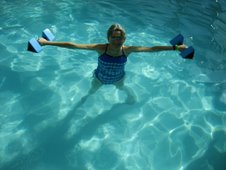
WELCOME TO AQUA FLEX'N STRETCH!!!

Experience 'All in One' combo classes of strength, cardio, and flexibility training with Aqua Flex'n Stretch as well as specialized classes for Arthritis, Fibromyalgia, Parkinson's, and other muscle conditions. Our certified instructors are top in the Los Angeles area and focus on overall health and wellness in small classes for maximum personal attention in salt and chlorine pools! The secret to success is having fun, making social connections, feeling good, and being energized. Take the plunge!


DON'T WAIT ---- CALL 818-383-4400 OR EMAIL AT AQUAFLEXN@SBCGLOBAL.NET FOR MORE INFO


2013 CLASS SCHEDULE

**PROVIDENCE/TARZANA OUTPATIENT THERAPY CENTER SALT-WATER POOL (5359 Balboa Blvd., next to 101 Freeway, Encino)
RSVP TO RESERVE YOUR SPOT!!!!
818-383-4400
All classes limited to 6 participants per class! Lots of 1:1 instruction!! FIRST COME, FIRST SERVE!
Open to the community.

Private and semi-private sessions.

Chair lift is available. Towels, all equipment, locker room and shower provided.
AQUATONE (1-hour):
(Work your whole body-cardio; strength and flexibility/balance; Adjusted for Arthritis Foundation as needed)
MONDAY: 4:30pm

MONDAY/WEDNESDAY: 5:30pm

TUESDAY/THURSDAY: 11:30am

THURSDAY: 7pm
SATURDAY: 11:15am

Fees: $150/8 classes; 1-month expiration
$20/drop-in with reservation
NEW YOQUATIX on Sundays!!!

45 minutes of restorative land yoga PLUS
45 minutes of restorative aqua

9:30 am and 10:30 classes

Half-price 1st class--only $20!!

Fees: $40/90 minutes; $150/4 classes

**BRAEMAR COUNTRY CLUB (Tarzana):
Beautiful outdoor heated pool in
Santa Monica hills.
HIIT The Water! Hi-Intensity!

SATURDAY: 9:30am - 10:30am

Aqua Tone

TUESDAY/THURSDAY: 11am - 12pm

Members:
Group: 1 class: $20; 8 class package: $150
Private: 1 class: $90; 4 class package: $350
Semi-Private: 1 class: $45; 4 class package: $170

Non-Members:
Group: 1 class: $22; 8 class package: $155
Private: 1 class: $95; 4 class package: $375
Semi-Private: 1 class: $50; 4 class package: $195
$29 one-time non-member fee

Free parking, towels, lockers, equipment

CALL 818-383-4400 OR EMAIL aquaflexn@sbcglobal.net

**FOUR SEASONS CENTER FOR HEALTH AND LONGEVITY (Westlake Village)
Private and semi-private sessions are available at this first-class heated indoor pool for members and hotel guests.
**AT-HOME PRIVATE/GROUP SESSIONS:
Want the convenience of a private class at your home? Or, put together your own group, and we'll come to you!
CALL 818-383-4400 or EMAIL at aquaflexn@sbcglobal.net
http://www.linkedin.com/

Showing posts with label fatigue. Show all posts

Thursday, January 17, 2013

IS IT THE FLU OR A COLD??


Is It A Cold Or the Flu? How to Tell the Difference

Here's a chart to help you figure out which one you might have. Either way, doctors advise getting an annual flu shot.
As the influenza epidemic sweeps through the country, you may be wondering if it’s the flu or a cold causing your sniffles.
One major difference between the two is that there is a vaccine for the flu, a disease that can have life-threatening complications
“An annual flu vaccine is recommended for everyone over the age of six months,” said a spokesperson for the Los Alamitos Medical Center. “It’s especially important for those at risk of developing serious complications from the flu to receive the vaccine.” 
Unfortunately, there’s no vaccine for the common cold, but you can figure out whether you’ve been infected by the human rhinovirus (the cold) or influenza.
Both are highly contagious and have similar symptoms and seasons.
If you haven't been vaccinated and feel sick, or if you have been vaccinated—the flu shot isn’t always 100 percent effective—and you feel sick, here's a chart that may help you tell the difference between cold and flu.
Flu
Common Cold
Sudden onset of symptoms. Can be severe.
Mild symptoms
Fever between 102° F and 104° F. Lasts three to four days
Fever below 102 degrees
Muscle aches
Some aching muscles
Headache
Headache
Sore throat
Loss of appetite
Very tired and weak. Some people feel extremely exhausted
Stuffy nose
Cough that can be severe
Chills and sweats.
Nausea, vomiting and diarrhea (more common in children than adults)

Chart Courtesy Los Alamitos Medical Center 
You can get the flu the same way you get the cold—the virus lands on surfaces like counters, elevators buttons, stair rails or telephones. People get the virus on their hands and can then infect themselves when they touch their eyes, nose or mouth.
According to the Los Alamitos Medical Center, some people are more at risk of developing complications of the flu. These include young children and people older than 50. Other at-risk groups include:
  • Residents of nursing homes or chronic care facilities
  • People with chronic disorders such as diabetes, heart, lung or kidney disorders
  • People with a weakened immune system including those with HIV, leukemia or taking medications following an organ transplant
  • Women who are pregnant and in their second or third trimester
  • People who work in a healthcare facility
If you fall into one of these groups and develop symptoms of the flu, call your doctor immediately. If you’re not one of those people in the at-risk group, the best advice is to get plenty of rest, drink lots of liquid and avoid using alcohol and tobacco.
You can take over-the-counter medicines to relieve symptoms such as fever, muscle aches, nasal congestion and cough.
CAUTION: Do not give aspirin to children or teenagers who have flu-like symptoms, especially a fever. In some cases, this has caused a serious complication known as Reye’s syndrome.
If you develop complications including trouble breathing, a very high fever, a severe sore throat, a cough that produces a lot of green or yellow mucus, or you feel faint, call your doctor.
Anti-viral medications may be prescribed for cases of the flu. These medicines may shorten the time you feel ill. Some of these medications only work with certain types of influenza viruses. To be effective, these need to be taken no later than 24 to 48 hours after you first develop symptoms.

Monday, April 30, 2012

FIBROMYALGIA PAIN RELIEF


Try Gentle Water-Based Workouts

Whether or not you're a water lover, you'll want to at least try water exercises. Numerous studies report that this form of low-impact exercise -- especially when done in warmwater -- can help reduce pain, stiffness, fatigue, and depression in many people with fibromyalgia. And you don't have to endure the back-and-forth monotony of swimming laps if that's not for you. There are a variety of fun, get-wet workouts to choose from -- including music-based aqua aerobics, underwater walking or jogging, strength training, stretching, and water-based relaxation therapies like yoga, tai chi, and Watsu. Heck, some spas and fitness centers even offer pool-based Zumba, hip hop, and country-western line dancing. (Real Age, 4/30/12)

Friday, February 26, 2010

LEG AND FOOT CRAMPS

Do you find your muscles in legs and/or feet cramping up? Cramping happens often, especially when first starting exercise. Basically, cramping is a fatigue of the muscle, either physically or physiologically - when you are asking your muscles to do something they are not used to, even when you stand too long, walk too far, walk/wear the same shoes for too long, do some exercise it is not used to....thus the toes cramp when you start exercising. 
To help the cramps, stay hydrated, ease into your workouts, and keep the body supplied with the minerals and elements it needs, such as natural supplements like bananas and other foods. Eventually the feet and legs get stronger and the cramps will be reduced. Don't forget to skip the coffee or tea before a workout. They can dehydrate the body. Also, try a cup of tonic water with quinine. Or, try mustard. Amazingly, they work!

Monday, February 8, 2010

ACL Injuiries and the Brain

new study has linked mental fatigue with anterior cruciate ligament (ACL) injuries among athletes. The study, published in the August issue of Medicine & Science in Sports & Exercise(2009; 41 [8], 1662–73), suggested that the brain is just as important as muscle in preventingACL injuries.

Thursday, April 10, 2008

Physical Activity Is Natural Pain Reliever For Arthritis

It may seem counterintuitive to exercise when suffering with joint pain, but physical activity is actually a natural pain reliever for most people suffering from arthritis according to a recent study published in Arthritis Care and Research journal. The study concluded that regular exercise is effective in significantly improving and managing arthritis pain.

Arthritis is projected to increase by 40 percent, affecting 67 million Americans, in the next two decades. Participants in the study reported a decrease in pain and fatigue, an increase in upper and lower extremity function, and an increase in strength after participating in a basic, eight-week exercise program. Exercising for joint health is different than exercising for cardio health. People living with arthritis don't have to sweat to achieve success. "Even minor lifestyle changes like taking a 10-minute walk three times a day can reduce the impact of arthritis on a person's daily activities and help to prevent developing more painful arthritis," explains Patience White, M.D., chief public health officer of the Arthritis Foundation. "Physical activity can actually reduce pain naturally and decrease dependence on pain medications."

Friday, May 18, 2007

JUST PLANE STIFF

For all the travelers this season, sitting on a plane is tough on our joints. Here are some tips from the Physical Therapy Association to keep prevent stiffness and pain. Do each of them 5-10 times throughout the flight.

1. Heel raises: Sit with feet flat on floor, lift heels off floor, hold for 5-10 seconds and lower

2. Ankle circles: Lift one leg slightly off ground and circle foot clockwise counterclockwise each 15 times, repeat with other leg

3. Overhead stretches: Reach arms straight up and stretch for 10 seconds, lean to left and then right, bend at waist, open and close hands, circle wrists as your stretch

4. Back Twists: Reach right arm across body and grab the left armrest. Slowly turn body and head as far to left as comfortable and hold for 5-10 seconds.

5. Curl downs: Pull stomach and chin in while sitting and gently curl your body down very slowly, reaching hands toward the floor. Hold 5-10 seconds and slowly uncurl.

Happy travels!