WELCOME TO AQUA FLEX'N STRETCH!!!

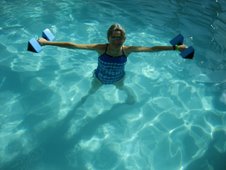
Experience 'All in One' combo classes of strength, cardio, and flexibility training with Aqua Flex'n Stretch as well as specialized classes for Arthritis, Fibromyalgia, Parkinson's, and other muscle conditions. Our certified instructors are top in the Los Angeles area and focus on overall health and wellness in small classes for maximum personal attention in salt and chlorine pools! The secret to success is having fun, making social connections, feeling good, and being energized. Take the plunge!


DON'T WAIT ---- CALL 818-383-4400 OR EMAIL AT AQUAFLEXN@SBCGLOBAL.NET FOR MORE INFO


2013 CLASS SCHEDULE

**PROVIDENCE/TARZANA OUTPATIENT THERAPY CENTER SALT-WATER POOL (5359 Balboa Blvd., next to 101 Freeway, Encino)
RSVP TO RESERVE YOUR SPOT!!!!
818-383-4400
All classes limited to 6 participants per class! Lots of 1:1 instruction!! FIRST COME, FIRST SERVE!
Open to the community.

Private and semi-private sessions.

Chair lift is available. Towels, all equipment, locker room and shower provided.
AQUATONE (1-hour):
(Work your whole body-cardio; strength and flexibility/balance; Adjusted for Arthritis Foundation as needed)
MONDAY: 4:30pm

MONDAY/WEDNESDAY: 5:30pm

TUESDAY/THURSDAY: 11:30am

THURSDAY: 7pm
SATURDAY: 11:15am

Fees: $150/8 classes; 1-month expiration
$20/drop-in with reservation
NEW YOQUATIX on Sundays!!!

45 minutes of restorative land yoga PLUS
45 minutes of restorative aqua

9:30 am and 10:30 classes

Half-price 1st class--only $20!!

Fees: $40/90 minutes; $150/4 classes

**BRAEMAR COUNTRY CLUB (Tarzana):
Beautiful outdoor heated pool in
Santa Monica hills.
HIIT The Water! Hi-Intensity!

SATURDAY: 9:30am - 10:30am

Aqua Tone

TUESDAY/THURSDAY: 11am - 12pm

Members:
Group: 1 class: $20; 8 class package: $150
Private: 1 class: $90; 4 class package: $350
Semi-Private: 1 class: $45; 4 class package: $170

Non-Members:
Group: 1 class: $22; 8 class package: $155
Private: 1 class: $95; 4 class package: $375
Semi-Private: 1 class: $50; 4 class package: $195
$29 one-time non-member fee

Free parking, towels, lockers, equipment

CALL 818-383-4400 OR EMAIL aquaflexn@sbcglobal.net

**FOUR SEASONS CENTER FOR HEALTH AND LONGEVITY (Westlake Village)
Private and semi-private sessions are available at this first-class heated indoor pool for members and hotel guests.
**AT-HOME PRIVATE/GROUP SESSIONS:
Want the convenience of a private class at your home? Or, put together your own group, and we'll come to you!
CALL 818-383-4400 or EMAIL at aquaflexn@sbcglobal.net
http://www.linkedin.com/

Showing posts with label pain. Show all posts

Thursday, January 17, 2013

IS IT THE FLU OR A COLD??


Is It A Cold Or the Flu? How to Tell the Difference

Here's a chart to help you figure out which one you might have. Either way, doctors advise getting an annual flu shot.
As the influenza epidemic sweeps through the country, you may be wondering if it’s the flu or a cold causing your sniffles.
One major difference between the two is that there is a vaccine for the flu, a disease that can have life-threatening complications
“An annual flu vaccine is recommended for everyone over the age of six months,” said a spokesperson for the Los Alamitos Medical Center. “It’s especially important for those at risk of developing serious complications from the flu to receive the vaccine.” 
Unfortunately, there’s no vaccine for the common cold, but you can figure out whether you’ve been infected by the human rhinovirus (the cold) or influenza.
Both are highly contagious and have similar symptoms and seasons.
If you haven't been vaccinated and feel sick, or if you have been vaccinated—the flu shot isn’t always 100 percent effective—and you feel sick, here's a chart that may help you tell the difference between cold and flu.
Flu
Common Cold
Sudden onset of symptoms. Can be severe.
Mild symptoms
Fever between 102° F and 104° F. Lasts three to four days
Fever below 102 degrees
Muscle aches
Some aching muscles
Headache
Headache
Sore throat
Loss of appetite
Very tired and weak. Some people feel extremely exhausted
Stuffy nose
Cough that can be severe
Chills and sweats.
Nausea, vomiting and diarrhea (more common in children than adults)

Chart Courtesy Los Alamitos Medical Center 
You can get the flu the same way you get the cold—the virus lands on surfaces like counters, elevators buttons, stair rails or telephones. People get the virus on their hands and can then infect themselves when they touch their eyes, nose or mouth.
According to the Los Alamitos Medical Center, some people are more at risk of developing complications of the flu. These include young children and people older than 50. Other at-risk groups include:
  • Residents of nursing homes or chronic care facilities
  • People with chronic disorders such as diabetes, heart, lung or kidney disorders
  • People with a weakened immune system including those with HIV, leukemia or taking medications following an organ transplant
  • Women who are pregnant and in their second or third trimester
  • People who work in a healthcare facility
If you fall into one of these groups and develop symptoms of the flu, call your doctor immediately. If you’re not one of those people in the at-risk group, the best advice is to get plenty of rest, drink lots of liquid and avoid using alcohol and tobacco.
You can take over-the-counter medicines to relieve symptoms such as fever, muscle aches, nasal congestion and cough.
CAUTION: Do not give aspirin to children or teenagers who have flu-like symptoms, especially a fever. In some cases, this has caused a serious complication known as Reye’s syndrome.
If you develop complications including trouble breathing, a very high fever, a severe sore throat, a cough that produces a lot of green or yellow mucus, or you feel faint, call your doctor.
Anti-viral medications may be prescribed for cases of the flu. These medicines may shorten the time you feel ill. Some of these medications only work with certain types of influenza viruses. To be effective, these need to be taken no later than 24 to 48 hours after you first develop symptoms.

Monday, January 14, 2013

Physical Activity and Quality of Life with Arthritis


Physical Activity Adherence and Quality of Life among Individuals with Arthritis
By Kelsey Stamps
Austin, S., Qu, H., & Shewchuk, R. M. (2011). Association between adherence to physical activity guidelines and health-related quality of life among individuals why physician-diagnosed arthritis. Quality of Life Research, 21, 1347-1357.
Purpose:
Physical activity is an important, non-pharmacological intervention to diminish pain and discomfort and to improve health-related quality of life in individuals with one of the most prevalent chronic conditions, arthritis. Health-related quality of life (HRQOL) is an indicator of physical and mental health, and a population’s chronic disease load. It evaluates the impact of arthritis, which is a leading cause of disability both in the U.S. and internationally. Adults with arthritis have poor HRQOL and, on average, report four more physically unhealthy days and 2.3 more mentally unhealthy days (within a 30 day period), compared to those without arthritis. After assuming that HRQOL for adults with arthritis would be predicted by adherence to physical activity guidelines controlling for health system factor (physicians’ recommendations for physical activity), pre-disposing, enabling, and need-relation factors, the authors hypothesized that individuals who did not adhere to recommended levels of physical activity would report more physically and mentally unhealthy days compared with those who did, controlling for physicians’ recommendations, predisposing, enabling, and need-related factors.
Conclusion: 
Individuals who did not adhere to the physical activity guidelines had more physically and mentally unhealthy days. By engaging in low- to moderate-intensity physical activity of approximately 150 minutes per week, evidence shows that individuals with arthritis had some degree of relief from pain, improved their physical function, and delayed onset of disability. The 150 minutes per week consisted of five 30-minute sessions. However, this study proved that adherence to physical activity is low in this population and interventions are needed to connect adults with arthritis to participate in physical activity. It is recommended that even if adults with other co-morbidities cannot meet at least 150 minutes per week they should still be physically active as much as possible whenever their conditions and abilities allow. 

Tuesday, May 15, 2012

TAPPING TO REDUCE PAIN


This is a new buzz in the holistic field (even though it’s been around for a long time).  It’s worth trying.  You can do it yourself.
What does MTT mean?
MTT is an abbreviation for "Meridian Tapping Techniques." Notice that the official name has an "S" at the end, it is plural. This means that there are a variety of "techniques" and innovations that use meridian points as a basic standard. For a more in depth explanation, please download our free manual HERE. MTT derives from a variety of techniques that involve tapping on acupressure points along the meridians.
You can use two fingers to touch and tap on these points yourself, or someone can tap on the points for you. Most, but not all, Meridian Tapping Techniques also involve saying certain phrases that help you focus on the issue that you are working on and tapping for. A MTT Professional can help you learn the correct tapping points as well as guide you through a tapping sequence (or 'round' as they are commonly called) and assist you in saying phrases that will be of most benefit.
How does it work and what does it do?
MTT is based on the assumption that negative emotions disrupt the flow in the body's energy system. When energy patterns are disrupted due to physical, mental or emotional trauma, it is believed that the path of energy between neurons can be disrupted. Practitioners that utilize Meridian Tapping Techniques have found that when people release negative emotions, it may help the energy flow again. Many people often experience other positive results as well including:
  • Reduce or eliminate chronic pain (including back pain)
  • Reduce or eliminate migraines
  • Reduce or eliminate Fibromyalgia
  • Reduce or eliminate stress
  • Reduce or eliminate insomnia
  • Reduce or eliminate anxiety and panic attacks
  • Reduce or eliminate fears and phobias (claustrophobia, agoraphobia, social phobia, fear of heights, fear of flying, fear of public speaking, fear of the dark)
  • Increase the rate of healing injuries
  • Increase flexibility and range of motion
  • Improve weight loss
  • Improve concentration and focus
  • Improve eye sight
  • Improve overall health and well-being
  • And more…
For more information go to www.meridiantappingtechniques.com – there’s LOTS of free information.

Monday, April 30, 2012

FIBROMYALGIA PAIN RELIEF


Try Gentle Water-Based Workouts

Whether or not you're a water lover, you'll want to at least try water exercises. Numerous studies report that this form of low-impact exercise -- especially when done in warmwater -- can help reduce pain, stiffness, fatigue, and depression in many people with fibromyalgia. And you don't have to endure the back-and-forth monotony of swimming laps if that's not for you. There are a variety of fun, get-wet workouts to choose from -- including music-based aqua aerobics, underwater walking or jogging, strength training, stretching, and water-based relaxation therapies like yoga, tai chi, and Watsu. Heck, some spas and fitness centers even offer pool-based Zumba, hip hop, and country-western line dancing. (Real Age, 4/30/12)

Sunday, November 20, 2011

Aerobic Exercise in Fibromyalgia Patients Improves Memory Efficiency


Article Date: 14 Nov 2011 - 1:00 PST
Georgetown University Medical Center
 

Areas of the brain responsible for pain processing and cognitive performance changed in fibromyalgia patients who exercised following a medication holiday, say researchers from Georgetown University Medical Center. They say the changes indicate brain functioning is more streamlined after an exercise intervention because less of the brain's resources is devoted to processing bothersome fibromyalgia perceptions such as pain. 

The study, presented at the Society of Neuroscience's annual meeting, Neuroscience 2011, used functional MRI scans to assess changes in the brain. Researchers observed a decrease in brain activity in areas responsible for memory and pain control after fibromyalgia patients took part in an exercise regimen. 

"The decreased brain activity we see in the area of cognition suggests that the brain is working more efficiently," explains Brian Walitt, M.D. M.P.H., director of the Fibromyalgia Evaluation and Research Center at Georgetown University Medical Center and senior study author. "We also see less brain activity in areas responsible for pain processing which might be aiding that efficiency." Walitt cautions that more research needs to be conducted before suggesting a change in clinical care for fibromyalgia. 

Fibromyalgia is a medical disorder characterized by widespread pain, fatigue, disordered sleep, and cognitive changes. It is regarded as an interoceptive disorder in that it has no apparent cause, Walitt says. "In conditions like this, the body perceives something by mistake." The pain is not psychosomatic, but is real and likely produced by the central nervous system, he says. 

To that end, the research team used fMRI to "provide a definitive measure of cognitive functioning, so that we can more scientifically measure the effect of exercise," says Manish Khatiwada, M.S., who will be presenting the results. "This is a novel approach to the study of fibromyalgia." (Khatiwada is working in the laboratory of co-author John VanMeter, Ph.D., director of the Center for Functional and Molecular Imaging.) 

For this study, the researchers enrolled eighteen women with fibromyalgia, and gave them a baseline fMRI to assess working memory and questionnaires about their well-being and pain while they were on medication. They then were told not to use their medications for a "washout" period, and had a second fMRI and memory testing. After six weeks, they had another assessment. The final scan was taken after the volunteers engaged in a six-week period of exercise, which involved three 30-minute sessions of aerobic exercise each week with a trainer. 

Memory and pain typically worsen in patients after stopping their medication - which was the experience of patients in this study. After six weeks of exercise, however, patients reported an improvement in overall well-being. However, their performance in the memory task did not change significantly when compared to their baseline study measurements. Despite a change in memory test performance, brain activity in the memory task and pain processing areas of the brain decreased. 

"What we see is a less interference by pain activity which could be contributing to the decrease in activity in the memory section. Basically, the brain is using less energy for the same task," Walitt says. 

Conclusions: Our results indicate that as the patients discontinue their current medication treatment and transition into the exercise treatment their subjective rating of change in pain initially increases and then decreases. Neuronal activity in areas recruited for an Nback working memory task follow an inverse pattern with an initial drop following medication cessation that increases on subsequent visits. These results are suggestive of the effect exercise on not only self report of global change in pain sensation in FM but also improvement in the network of cortical areas recruited in working memory. Thus, exercise may have benefit in both reducing FM symptoms and improving cognitive capacity. 

Support: American College of Rheumatology Investigator Award; MedStar Health Women’s Auxillary Intramural Grant.
The authors report no personal financial interests related to the study. This research is supported by an American College of Rheumatology Investigator Award and a MedStar Health Women’s Auxiliary Intramural Grant.
Georgetown University Medical Center

Thursday, August 25, 2011

Aquatic Exercise and Fibromyalgia (FMS)

Aquatic Therapy and Exercise has been recommended for the relief of Fibromyalgia pain. This article clearly discusses the benefits of the working in the water.

http://physical-therapy.advanceweb.com/Archives/Article-Archives/A-Good-Match.aspx

Thursday, March 24, 2011

Ai Chi for Fibromyalgia

Medical professionals recommend exercise for those with fibromyalgia; however, many sufferers live with chronic pain and are aerobically unfit, with little muscular strength and poor flexibility. Data analysis showed
that compared with the control group, tai chi participants experienced a clinically significant reduction in symptom severity over the 12 weeks and were still maintaining this reduction at the 24-week mark. The tai chi group improved in measurements of pain, sleep quality, depression and quality of life. Scientists do not know the mechanisms for why tai chi positively affects the symptoms of fibromyalgia. Study authors hypothesized that the combination of physical exercise with a mind-body focus, controlled breathing and movement may help in both overcoming fear of pain and coping with the experience of pain. At the same time, tai chi practice may stimulate certain neurochemical and analgesic pathways, leading to an overall improvement in quality of life.
The New England Journal of Medicine (2010; 363, 743–54).

Ai Chi (water Tai Chi) is the best for exercise with the healing properties of water to gain benefits from both. People with Fibromyalgia usually have complications with either or all: shoulders, knees, back, feet, neck, hands. Being in the water allows for relief along with the benefits of the specific movements of Ai Chi such as synchronized breathing for a duration of 45 minutes to an hour.

Friday, September 24, 2010

ARTHRITIS ---- DID YOU KNOW?? 

- 46 million men, women and children are in pain from arthritis

- 140,000 people with arthritis will visit their doctor

- 3,750 joints will be replaced – today

- Arthritis will be the largest category of disability claims filed

- Arthritis will cost this country $350M - today

- 3 people will die from arthritis - today

Thursday, April 15, 2010

PSYCHING YOURSELF UP TO EXERCISE


Denny Bender, Let's Move Together Blogger
Download MP3


Want to exercise, but just can’t seem to get moving? When it comes to health and fitness, your state of mind, or emotional conditioning, is as important as your physical conditioning.  Here's some tips from the Arthritis Foundation to help get you mentally prepared for physical fitness.

  Results of a recent study show that fear of pain (not pain itself) ranked as the No. 1 barrier preventing people with arthritis from exercising. Other mental hurdles, like a lack of motivation and not enjoying exercise, also ranked high.


Few people focus on the mental aspects of physical fitness, whether it’s overcoming injury-related anxiety or simply getting motivated to lace up your sneakers each day. Changing your mind-set can help you live a more active life. So, before you exercise, get your mind ready.

So how do you get your mind and your body prepared for exercise? Follow these three emotional conditioning tips:

1.Be flexible. People who adjusted their exercise routine to accommodate their arthritis are more likely to keep exercising than those who don’t. Avoid an all-or-nothing mentality. If your knees hurt, resolve to walk more slowly. If you’re stiff in the morning, then exercise in the evenings. Or cut the length of your workout in half, if you’re really sore. Having a Plan B keeps you from giving up when things seem tough.

2.Focus on the benefits. People who exercise regularly do so because they believe it makes them feel better, promotes weight loss and increases their ability to move. Reminding yourself of how good exercise is for your health can motivate you to make the effort, even when you’re feeling tired, sore or nervous.

3.Soothe yourself. Being anxious or afraid can amplify pain, which is why it’s important to get calm before you get moving. Before you start exercising, spend several minutes breathing deeply while picturing yourself doing your chosen activity. Also practice positive self-talk before and during exercise, saying or thinking phrases like “I can do this,” and “I feel pain, but doing this will help me feel less pain.”